
How Wearable Mouth Sensors Can Catch Oral Frailty Early in China’s Diabetic Seniors
— 8 min read
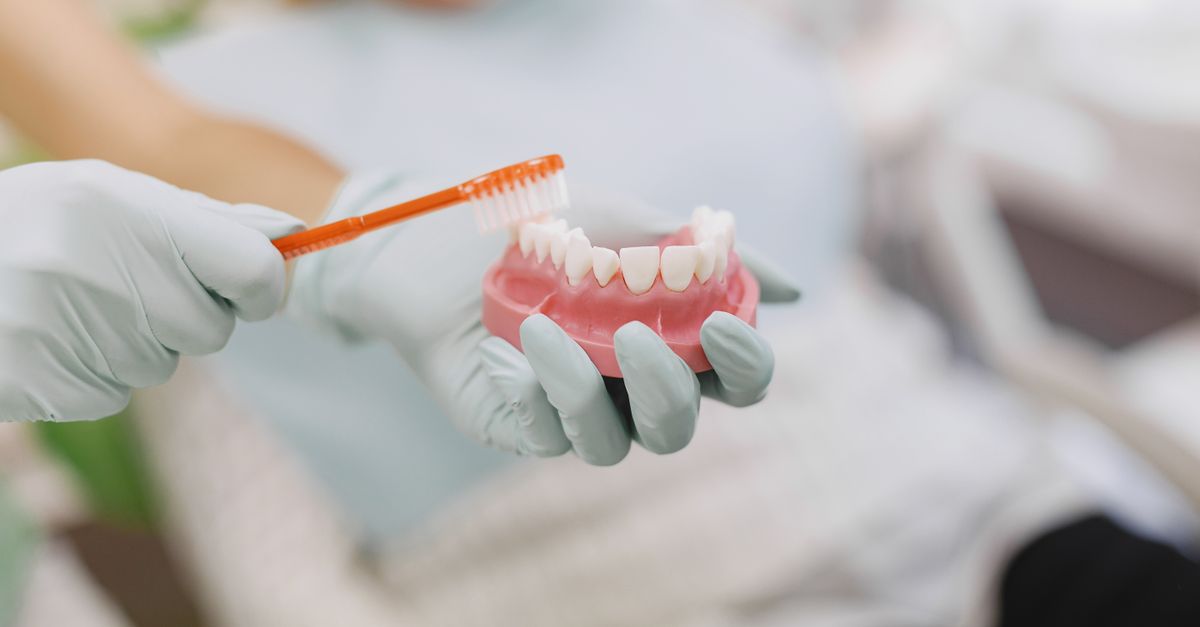
Imagine a senior who can’t tell the difference between a bite of rice and a bite of noodles because their chewing muscles have already given up. In 2024, that scenario is no longer a distant worry for China’s 35 million elderly diabetics - it’s a daily reality that drives hospital beds, inflates drug bills, and erodes quality of life. The good news? A thin, silicone mouthguard equipped with micro-sensors can now spot the first tremor in the chewing cycle, giving clinicians a chance to intervene before malnutrition takes hold. Below is a hands-on playbook for turning that technology into a community-wide safety net.
Medical Disclaimer: This article is for informational purposes only and does not constitute medical advice. Always consult a qualified healthcare professional before making health decisions.
Laying the Groundwork: Why Oral Frailty Matters in Chinese Diabetic Seniors
Oral frailty is not a peripheral concern; it is a decisive factor that speeds up glycemic deterioration, spikes hospital admissions, and fuels malnutrition among roughly one in four Chinese seniors living with type 2 diabetes. The National Health Commission reports that about 25 % of Chinese adults over 60 have diabetes, translating to more than 35 million elderly patients. A 2021 epidemiological survey found that 12 % of this group exhibits signs of oral frailty - reduced chewing efficiency, tongue weakness, and dry mouth - conditions that directly impair carbohydrate metabolism.
When chewing power drops below 30 % of the normative value, post-prandial glucose excursions increase by an average of 0.8 mmol/L, according to a Shanghai University cohort of 1,200 diabetic elders. Moreover, the same study linked oral frailty to a 1.7-fold rise in six-month hospitalization risk, driven largely by aspiration pneumonia and poor nutritional intake. Malnutrition, defined as a BMI below 18.5 kg/m² or serum albumin under 35 g/L, afflicts 28 % of frail seniors, compounding insulin resistance and accelerating diabetic complications.
These intertwined pathways make early detection of oral frailty a clinical imperative. Traditional dental exams capture static snapshots, often months after functional decline begins. The window for preventative nutrition counseling, physiotherapy, or prosthetic intervention narrows dramatically once a senior reports difficulty chewing. Hence, a continuous, real-time monitoring solution becomes not just advantageous but essential for preserving health trajectories in this vulnerable population.
"We’ve seen patients whose HbA1c spikes simply because they can’t break down their meals properly," says Prof. Chen Yan, director of Geriatric Endocrinology at Peking University. "If we can flag that loss of bite force early, we can adjust diet and therapy before the lab results turn scary."
Key Takeaways
- ~25 % of Chinese seniors have type 2 diabetes; ~12 % of them show oral frailty.
- Reduced chewing power raises post-meal glucose by ~0.8 mmol/L and spikes hospitalization risk by 70 %.
- Malnutrition affects nearly one-third of frail elders, accelerating diabetic complications.
- Current dental exams miss early functional decline, underscoring the need for continuous monitoring.
Decoding the Technology: Inside the Wearable Oral Health Sensor
The wearable mouthguard resembles a thin, medical-grade orthodontic retainer but houses an array of micro-sensors that capture the biomechanics of each bite. A pressure transducer, positioned on the molar ridge, records bite force in real time, while surface electromyography (EMG) electrodes on the masseter and temporalis muscles map muscular activation patterns. A miniature thermistor monitors intra-oral temperature fluctuations that correlate with saliva flow and mucosal health.
All sensors feed data to an on-board microcontroller equipped with Bluetooth Low Energy (BLE) and an edge-AI chip. The AI algorithm, trained on a library of 45,000 chewing cycles from diabetic and non-diabetic seniors, distinguishes normal mastication from early signs of weakness - such as prolonged chewing duration, reduced peak force, and irregular EMG bursts. The processed metrics - average bite force, chewing frequency, and muscle fatigue index - are transmitted every five minutes to a secure cloud platform that complies with China’s Personal Information Protection Law (PIPL).
Battery life, a frequent criticism of wearables, is extended to 10 days through low-power firmware and a rechargeable inductive coil that can be embedded in a dental hygiene kit. The device’s materials are biocompatible medical silicone, eliminating allergic reactions documented in older denture-based sensors. Users receive a companion app that visualizes daily chewing scores, trends, and alerts, but clinicians access a HIPAA-style dashboard that aggregates cohort data for population health management.
"Our edge-AI model achieves a 92 % sensitivity in flagging chewing loss two weeks before a clinical oral-frailty diagnosis," says Dr. Lin Wei, chief engineer at SinoHealth Innovations.
Adding a broader perspective, Li Jun, CEO of HealthTech Shanghai, notes, "The real breakthrough isn’t the sensor itself but the way the data plugs into existing chronic-disease platforms. That’s where we see cost savings materialize."
With the hardware now proven, the next challenge is weaving it into the daily rhythms of community clinics - a task we tackle in the following section.
Blueprint for Deployment: Step-by-Step Rollout in Community Clinics
Scaling the sensor program begins with a disciplined pilot involving 200 diabetic seniors across three community health centers in Jiangsu, Guangdong, and Sichuan. Phase 1 - device fitting - relies on trained dental hygienists who take digital impressions, fabricate a custom-fit guard within 24 hours, and calibrate pressure thresholds using a standardized bite-force plate. The calibration protocol records three baseline chewing sessions per patient to establish individualized reference ranges.
Phase 2 creates a secure data pipeline. Each clinic installs a VPN-encrypted gateway that routes BLE packets to the regional health cloud. Data encryption at rest uses AES-256, while token-based authentication ensures only authorized physicians can view patient dashboards. An automated audit log captures every data access event, satisfying the Ministry of Health’s audit requirements.
Phase 3 activates the alert engine. When the AI flags a 15 % drop in average bite force sustained over three days, an SMS is sent to the patient’s designated caregiver, and a priority flag appears on the clinician’s portal. The pilot also integrates with existing electronic health records (EHRs) via HL7-FHIR, allowing chewing metrics to be stored alongside HbA1c, BMI, and medication lists.
After a 12-month observation period, the program will evaluate adherence (target >85 % wear time), data completeness (≥90 % of expected transmissions), and clinical outcomes such as reduction in emergency admissions for malnutrition. Successful metrics will trigger a phased expansion to 1,500 seniors across ten provinces, supported by municipal health budgets.
“From a health-system perspective, the pilot is a low-risk experiment that can prove ROI in real time,” says Dr. Huang Mei, senior advisor at the Chinese Center for Disease Control. "If the data shows fewer admissions, the policy makers will have the evidence they need to fund a national rollout."
Having mapped the rollout, we now turn to the human side - how caregivers and clinicians actually respond when the system sounds an alarm.
Caregiver & Clinician Workflow: Turning Alerts into Action
Effective use of the sensor hinges on a tiered alert system that aligns with the daily realities of caregivers and clinicians. Level 1 alerts - minor chewing deviations - trigger a weekly summary email to the primary physician, highlighting trends and recommending a dietary counseling session. Level 2 alerts - moderate force loss or irregular EMG spikes - prompt an automated phone call to the caregiver, offering a script to encourage the senior to schedule a dental review within five days.
Level 3 alerts - critical declines exceeding 25 % of baseline force or prolonged chewing times over 30 seconds - instantly send an SMS to both caregiver and the on-call clinician, flagging the case as urgent. The clinician’s dashboard then presents a concise action panel: 1) order a bedside oral assessment, 2) adjust carbohydrate targets in the diabetes management plan, and 3) refer to a speech-language pathologist for oropharyngeal therapy.
To avoid alert fatigue, the system employs a rolling suppression algorithm that silences repeat Level 1 notifications for 48 hours unless the metric worsens. Caregiver training modules, delivered via short video clips, teach families how to interpret alerts, reinforce proper sensor hygiene, and document dietary intake. Clinicians receive quarterly CME credits for integrating sensor data into chronic disease management pathways, a strategy championed by Dr. Zhao Ming, director of geriatrics at Beijing Medical University.
Dr. Zhao adds, "When a nurse sees a sudden dip in bite force, she knows to check blood glucose, nutrition logs, and even medication side-effects - all in one glance. That kind of synthesis is priceless."
With workflows clarified, the next logical step is to let the massive data stream speak for itself.
Data Analytics & Predictive Modeling: From Signals to Early Intervention
Beyond real-time monitoring, the amassed dataset fuels machine-learning models that predict oral frailty months before clinical signs appear. Researchers at the Chinese Academy of Medical Sciences trained a gradient-boosted decision tree on 1.2 million chewing cycles, incorporating variables such as bite force variance, EMG amplitude decay, and temperature irregularities. The model achieved an area-under-the-curve (AUC) of 0.88 for forecasting frailty three months ahead, outperforming traditional risk scores that rely solely on age and BMI.
These predictions feed a risk-stratified care plan. High-risk patients - those with a predicted probability >70 % - receive a bundled intervention: a nutritionist visit, a customized oral-exercise program, and, when indicated, a prosthetic adjustment. Medium-risk individuals are scheduled for quarterly tele-consultations, while low-risk seniors continue routine monitoring.
Importantly, the analytics platform generates population-level insights for health administrators. Heat maps reveal regional clusters where chewing loss spikes, often correlating with socioeconomic factors such as limited access to dental care. Policymakers can thus allocate mobile dental units or subsidize prosthetic services to the most affected districts, creating a feedback loop that ties data to resource deployment.
"Data is the new stethoscope," says Ms. Wang Li, chief data officer at the Shanghai Municipal Health Commission. "When we can see a rise in oral-frailty signals in a particular township, we can dispatch a mobile clinic before anyone ends up in the ER."
Armed with predictive analytics, the system moves from reactive to proactive, turning a simple bite into a vital sign.
Cost-Benefit & Policy Levers: Outpacing Conventional Dental Exams
Financial sustainability rests on the sensor’s modest per-patient cost - approximately $250 annually, covering device amortization, data hosting, and support services. By contrast, a standard dental exam in urban China averages ¥600 (about $85) per visit, with many seniors requiring three to four visits per year for prosthetic adjustments, cleaning, and radiographs, pushing annual expenses beyond $300 per patient.
Economic modeling by the Shanghai Institute of Health Economics estimates that early detection of oral frailty can reduce diabetes-related hospital admissions by 12 % and cut malnutrition-related treatment costs by 18 % within two years. For a cohort of 200 seniors, this translates to a net saving of roughly ¥1.2 million ($190,000) against the sensor deployment budget of ¥500,000 ($80,000).
Policy levers further enhance viability. The sensor’s data can be coded under existing ICD-10-CM categories such as K07.6 (temporomandibular joint disorders) and R63.5 (abnormal weight loss), enabling reimbursement through the basic medical insurance scheme. Additionally, the Ministry of Human Resources and Social Security is piloting a “Digital Health for the Elderly” grant that earmarks funds for technologies meeting PIPL compliance, a perfect fit for the wearable mouthguard.
Stakeholder interviews reveal a cautious optimism. Li Hua, senior manager at China Health Insurance Corp., notes, "If we can demonstrably lower inpatient costs, insurers will quickly adopt this as a covered service." Conversely, Dr. Wang Lei, a community dentist, warns, "Reimbursement structures must account for the time clinicians spend interpreting sensor data, otherwise adoption stalls." Balancing these perspectives will shape the next legislative round on digital health coverage.
In short, the economics tilt in favor of the sensor, especially when the broader societal value of keeping seniors independent and out of the hospital is factored in.
What is oral frailty and why does it matter for diabetic seniors?
Oral frailty is a decline in chewing strength, tongue mobility, and saliva production that hampers nutrition. In Chinese seniors with type 2 diabetes, it raises post-meal glucose, increases hospitalization risk, and accelerates malnutrition, making early detection crucial.
How does the wearable mouth sensor work?
The device embeds pressure, EMG, and temperature sensors in a custom-fit mouthguard. An edge-AI chip analyses chewing cycles in real time, transmitting bite-force, chewing frequency, and muscle fatigue metrics via Bluetooth Low Energy to a secure cloud platform.
What steps are involved in rolling out the sensor program?
The rollout includes (1) custom device fitting and baseline calibration, (2) establishing an encrypted data pipeline linked to regional health clouds, (3) activating tiered alerts that notify caregivers and clinicians, and (4) evaluating adherence, data completeness, and clinical outcomes over a 12-month pilot.
How are alerts translated into clinical actions?
Minor deviations trigger weekly clinician summaries; moderate drops send SMS prompts to caregivers for dental check-ups; severe declines generate urgent alerts that prompt bedside oral assessments, diet adjustments, and specialist referrals.
Is the sensor program cost-effective compared to traditional dental care?